


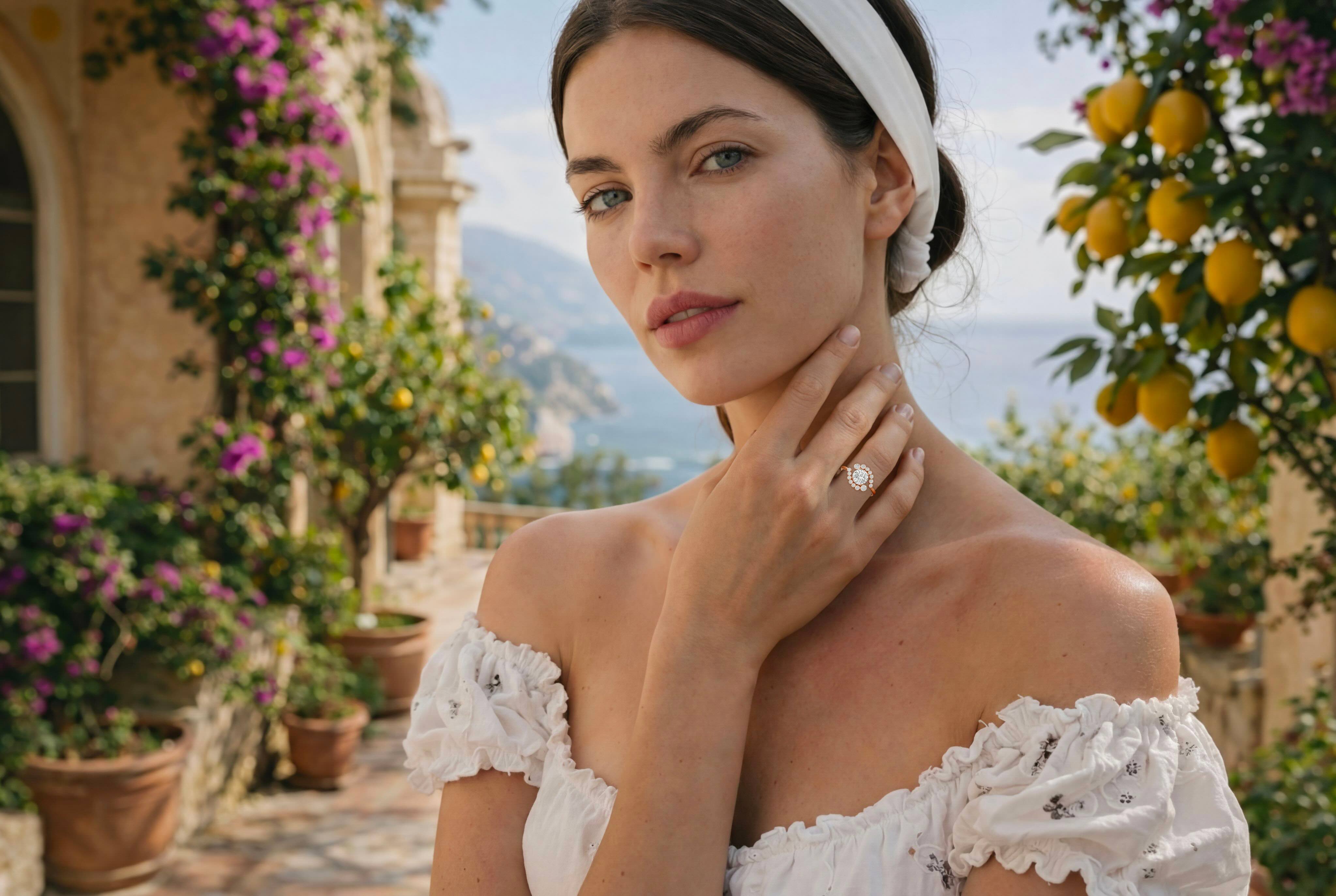
The complete guide for an informed, lasting, and elegant choice
Choosing an engagement ring is one of the most memorable moments in a relationship. This piece of jewelry embodies a promise, a commitment, and a vision for the future. But beyond the emotion, there's a technical reality: an engagement ring is a precious object meant to be worn every day, sometimes for a lifetime.
If you wish to explore different styles before making your choice, browse our collection of 18k gold engagement rings, designed to last and enhance every hand.
Natural diamond or lab-grown diamond? Which carat to choose? Which stone shape will best flatter the hand? Which metal to prioritize for durability? How to anticipate the wedding band?
This comprehensive guide will walk you through each step to choose an engagement ring with discernment, balance, and high standards.

Why is the engagement ring a unique piece of jewelry?
Unlike a second-hand or fashion jewelry, the engagement ring has both a symbolic and structural dimension.
It must:
- be strong enough for daily wear
- retain its brilliance for decades
- adapt to evolving styles
- harmonize with the future wedding band
Traditionally, it features a central stone, most often a diamond, set on an 18k gold band. It is given during the marriage proposal, while the wedding band is exchanged on the day of the ceremony.
This dual wear (engagement ring + wedding band) must be anticipated from the start.
The step-by-step method (8 steps)
Step 1: Understanding the diamond
Diamonds are chosen for their exceptional hardness (10 on the Mohs scale), resistance, and ability to reflect light. But not all diamonds are created equal.
To understand precisely how to evaluate a diamond, discover our complete guide on the 4Cs of diamond (Carat, Cut, Color, and Clarity), which details each criterion in depth.
Natural diamond or lab-grown diamond?
A natural diamond is formed deep within the Earth under high pressure over billions of years. A lab-grown diamond has exactly the same chemical and crystalline structure. It is created in a controlled environment replicating these natural conditions.
Visually, they exhibit the same brilliance. The difference lies in:
- origin
- price
- symbolic perception
The choice will depend on your personal preference and budget.
If you are undecided between these two options, consult our detailed analysis on the differences between natural and lab-grown diamonds to compare price, value, and long-term perception.
The 4Cs explained in depth
1. Carat (weight)
Carat corresponds to the weight of the diamond. 0.50 carat = 100 points. 1 carat = 0.2 grams. The higher the carat, the rarer and more expensive the stone. But carat alone does not guarantee beauty.
2. Cut (cut quality)
This is the most important criterion. An excellent cut allows light to enter the stone, reflect, and exit through the top, creating brilliance. A poorly cut diamond, even if heavy, will appear dull.
3. Color (color)
Diamonds are graded from D (colorless) to Z (warmer tint). For a white gold ring, a more colorless color is often preferred. Yellow or rose gold allows for slight tolerance.
4. Clarity (purity)
Clarity evaluates the presence of internal inclusions. Some are invisible to the naked eye and do not affect brilliance or durability.
Each criterion directly influences the beauty and price of a ring. We detail these elements in our expert guide dedicated to the 4Cs of diamond.

What about colored stones?
While diamonds remain the most traditional stone for an engagement ring, they are not the only option. Colored stones are increasingly appealing for their personality, intensity, and symbolism.
Sapphire
Sapphire, often associated with deep blue, symbolizes fidelity and wisdom. It offers excellent resistance (9 on the Mohs scale), making it a durable alternative for daily wear.
Beyond classic blue, green sapphires and pink sapphires are currently very popular. Green, deep or slightly olive, brings natural and contemporary elegance. Pink, delicate or more intense, evokes softness and modernity. These shades allow for the creation of a unique engagement ring, while maintaining excellent durability.
Emerald
Emerald stands out for its vibrant green and unique character. It requires more precautions due to its natural inclusions, but its charm is incomparable. Its deep brilliance gives the ring a refined and assertive dimension.
Ruby
Ruby, intense and luminous, embodies passion and strength. Its high hardness makes it suitable for a ring worn every day. Its deep red immediately catches the eye and creates a bold and symbolic piece.
Other precious stones
Morganite, spinel, tourmaline… Some stones offer softer or more contemporary shades. However, their hardness should be checked to ensure their resistance over time, as an engagement ring is meant to be worn daily.
Diamond or colored stone?
The choice will depend on:
- the personality of the wearer
- the desired symbolism
- the frequency of wear
- the overall style of the ring
An engagement ring can be timeless with a diamond, or bold with a carefully selected colored stone. The essential remains the balance between aesthetics, durability, and coherence.
Whether you choose a diamond or a colored stone, the quality of cut, proportions, and setting remain essential to guarantee brilliance and durability.

Depending on your style, you can also explore our diamond engagement rings or our colored stone engagement rings.
To go further, consult our dedicated guide: colored stone engagement ring: what alternative to diamond?
Step 2: Choosing the diamond shape
The shape greatly influences the style and perceived size.
- Round brilliant: maximum sparkle, classic, timeless
- Oval: visually elongates the finger, often appears larger for the same carat weight
- Pear: bold silhouette, mix of roundness and point
- Emerald: wide facets and architectural lines, less sparkle but more depth
- Cushion: rounded edges, romantic and soft
- Princess: modern square, very graphic
The choice should reflect the personality of the future fiancée.

Step 3: Choosing the setting
The setting determines the protection of the diamond, the overall aesthetics, and comfort.
- Solitaire: minimalist, places the stone at the center
- Prong setting: exposes the diamond more to light
- Bezel setting: surrounds the stone with a strip of gold, more contemporary and protective
- Halo: visually amplifies the central stone
- Three-stone: symbolizes past, present, and future
Step 4: Choosing the ring metal
The metal is often underestimated. However, it plays an essential role in the durability, aesthetics, and overall harmony of the ring.
Why prefer 18k gold?
18k gold is composed of 75% pure gold. It offers excellent resistance, optimal durability over time, beautiful density, and deep luster. 9k gold contains less pure gold and can tarnish more quickly. For a ring worn daily for decades, 18k gold remains the standard.
Yellow gold, rose gold, or white gold?
- Yellow gold: classic and timeless, particularly enhances slightly tinted diamonds (G-H-I)
- Rose gold: warm and romantic, very flattering on both fair and dark skin tones
- White gold: modern and luminous, pairs well with very white diamonds (D-E-F)
The choice should be made by observing the jewelry already worn. Visual coherence is essential.
Step 5: Determining a smart budget
There is no universal rule. The famous "three months' salary rule" is a 20th-century marketing invention.
A smart budget is based on:
- your priorities (size vs. quality)
- the type of diamond
- the complexity of the setting
- the chosen metal
Strategic tip: for the same budget:
- prioritize an excellent cut
- sometimes accept a slightly lower carat weight
- optimize color based on the metal
A well-proportioned 0.60 carat diamond can appear more luminous than a poorly balanced 0.80 carat.
Step 6: Anticipating the wedding band
This is a common mistake: choosing a ring without thinking about the future wedding band. Some high settings allow for a straight wedding band. Others require a curved wedding band, a custom-fitted wedding band, or a design conceived as a duo from the start.
Considering the ensemble avoids aesthetic incompatibilities.

To create a harmonious duo, discover our women's wedding bands and, if you are looking for a wedding band for him, our men's wedding bands.
Step 7: Thinking about daily comfort
An engagement ring is worn every day. Consider the height of the diamond, the thickness of the band, the total weight, and the inner comfort fit.
A ring that is too high can snag. A band that is too thin may lack durability. The balance of proportions is essential.
Step 8: Finding the right size
If you want to keep it a surprise:
- discreetly borrow a ring worn on the left ring finger
- ask a close friend
- plan for an adjustment after the proposal
Most rings can be adjusted by one or two sizes.
If the size is not perfect, the first resizing is offered within 12 months of purchase. To be sure from the start, you can also book an appointment.
Useful insights (what makes the difference)
How to choose the ideal visual diamond size?
Beyond carat weight, visual perception depends on:
- the shape
- the proportions
- the setting
- the width of the band
An oval or pear diamond often appears larger than a round one of the same carat weight. A halo can visually amplify the center stone. A very thin band enhances the stone more. Conversely, an overly massive setting can visually "absorb" the diamond.
Overall balance matters more than raw weight.
Natural diamond vs. lab-grown diamond: detailed comparison
Composition
Both are composed of crystallized carbon. They exhibit the same hardness, brilliance, and resistance.
Price difference
Lab-grown diamonds are generally 20 to 40% more accessible for equivalent carat weight.
Perceived value
Natural diamonds are associated with geological rarity. Lab-grown diamonds appeal for their traceability and technical mastery.
Environmental impact
Both require resources. The issue is more complex than a simple marketing argument. The choice should remain personal and thoughtful.

Which ring for which personality?
- She is minimalist: round solitaire, discreet bezel setting, thin band.
- She likes bold jewelry: oval or pear diamond, halo, delicate pavé.
- She prefers timeless elegance: round brilliant, yellow gold, balanced proportions.
- She likes architecture and strong lines: emerald cut, structured setting, white gold.
Observing the jewelry she already wears is often the best clue.
How much does an engagement ring really cost?
The price depends on several factors:
- type of diamond (natural or lab-grown)
- carat weight
- quality of the 4Cs
- metal
- complexity of the setting
As an indication:
- 0.50 carat natural of good quality: several thousand euros
- 1 carat natural: can exceed €8,000 to €12,000 depending on criteria
- lab-grown: more accessible for equivalent quality
It is possible to create an elegant ring without aiming for a high carat weight, by optimizing proportions.
The budget also depends on the choice between natural and lab-grown diamonds, a point we detail in our dedicated comparison.
Current engagement ring trends
While not excessively following trends, some are emerging:
- elongated shapes (oval, pear)
- modern bezel setting
- slightly wider bands
- rings designed from the outset with the wedding band in mind
However, a timeless ring will endure better through the decades than a choice too heavily influenced by a trend.
The importance of proportions
A successful ring relies on:
- a harmonious balance between the stone's diameter and the band's width
- controlled height
- good weight distribution
A stone that is too high can snag. A stone that is too low may lack sparkle. Comfort and balance are invisible… but essential.
The psychology of choice
Choosing an engagement ring often generates:
- pressure
- fear of making the wrong decision
- confusion regarding technical criteria
The best approach is methodical: define the budget → understand the 4Cs → choose the shape → select the setting → check comfort → anticipate the wedding band. Structuring the decision reduces uncertainty.
Common mistakes to avoid
- Focusing solely on carat weight: weight doesn't guarantee brilliance.
- Neglecting cut quality: the most visually costly mistake.
- Choosing a style incompatible with personality: the ring should reflect her.
- Ignoring compatibility with the wedding band: it's better to anticipate.
- Buying without a certificate: essential (GIA or equivalent).
Should you choose a custom-made engagement ring?
Custom-made allows you to:
- precisely select the stone
- adapt proportions
- harmonize the engagement and wedding rings
- create a unique design
This is the ideal solution if you want a truly personal piece of jewelry.
Custom-made allows you to create an engagement ring perfectly adapted to your story and your expectations. Discover our custom-made engagement ring creation service, which guides you in choosing the diamond, proportions, and setting.

How to know if you've made the right choice?
A successful ring evokes:
- an immediate emotion
- visual balance
- a natural feel on the finger
- coherence with one's style
The right choice isn't the biggest diamond. It's the one that feels obvious.
Practical advice after purchase
How to care for an engagement ring so it lasts a lifetime?
An 18-carat gold engagement ring set with a diamond is designed to last. However, regular maintenance helps preserve its brilliance and strength.
Diamond cleaning
Over time, residues (soap, cream, dust) can dull its sparkle. Simple home cleaning involves:
- soaking the ring in lukewarm, slightly soapy water
- using a soft brush
- rinsing thoroughly
- drying with a non-abrasive cloth
An annual check-up with a jeweler also allows for setting verification.
Setting verification
The prongs or the bezel of a bezel setting should be inspected regularly to prevent any risk of loosening.
Gold repolishing
18-carat gold can be polished to restore its original luster. This operation allows the ring to regain its initial appearance after several years of wear.
Proper maintenance significantly extends the life of the jewel.
Should you insure an engagement ring?
An engagement ring often represents a significant investment. Insuring the ring may be relevant in the following cases:
- high-carat diamond
- significant value
- frequent travel
- intensive daily wear
Some home insurance policies cover jewelry, but sometimes a specific extension is necessary. Keeping the diamond certificate and invoice is essential.
Engagement ring and ethics: what you need to know
Today, many future fiancés want to understand the origin of the materials.
Diamond traceability
Natural diamonds are subject to the Kimberley Process, aimed at avoiding conflict diamonds. Lab-grown diamonds offer direct traceability linked to their production.
Recycled gold
Gold can be recycled without loss of quality. This helps limit additional mining. Choosing an engagement ring also involves considering provenance and responsibility.
Which engagement ring for which hand shape?
Slender fingers
- delicate bands
- elongated shapes (oval, pear)
- balanced proportions
Wider fingers
- slightly more prominent stone
- slightly wider band
- structured setting
Small hands
- avoid disproportionate diamonds
- favor subtlety
Overall harmony always takes precedence over the raw size of the diamond.
Engagement ring: timeless or daring?
Some choices are decidedly classic:
- round solitaire
- yellow gold
- traditional proportions
Others are more daring:
- emerald cut diamond
- architectural setting
- graphic halo
A timeless ring will more easily span decades. A daring choice can reflect a strong personality. The right balance depends on the wearer.
For maintenance, refurbishment or repair, consult our lifetime warranty and repairs page. For shipping, our conditions are detailed on secure and insured delivery.
Frequently Asked Questions
What is the best carat for an engagement ring?
Between 0.50 and 1 carat represents a common balance. But cut quality remains a priority.
What is the difference between natural and lab-grown diamonds?
They have the same physical properties. The origin differs.
How much does an engagement ring cost?
The price depends on the diamond, metal, and design. It can range from a few thousand to several tens of thousands of euros.
Can a ring be resized after the proposal?
Yes, in most cases.
Which diamond shape visually elongates the finger?
Elongated shapes like oval or pear.
In summary
Choosing an engagement ring is not a question of trend or social norm. It's a search for balance between emotion, quality, proportion, durability, harmony with the wedding band, and the personality of the wearer.
A well-chosen diamond, a consistent setting, and durable 18-carat gold will create a piece of jewelry designed to last for years.
To deepen your reflection, also explore our guide on the 4Cs of diamonds and our comparison natural diamond vs. lab-grown diamond.
The right choice is not the one that impresses the most. It's the one that feels obvious.
See our models and get advice
If you want to compare styles before choosing, discover our collection of engagement rings in recycled 18-carat gold, handcrafted in Paris.
To confirm a choice of stone, shape, or proportions, you can also make an appointment at the showroom or via video call.

Leave a comment
This site is protected by hCaptcha and the hCaptcha Privacy Policy and Terms of Service apply.